

.png)
LEARNING HUB
Access, Safety &
Maintenance Constraints
Understand biosolar roof access, safety and maintenance constraints, including walkways, roof loading, live solar PV, vegetation protection, fall risks and safe working areas.
Why Biosolar Access Needs More Planning
Biosolar roofs combine living vegetation with active solar PV systems, so maintenance access needs more coordination than on a conventional roof.
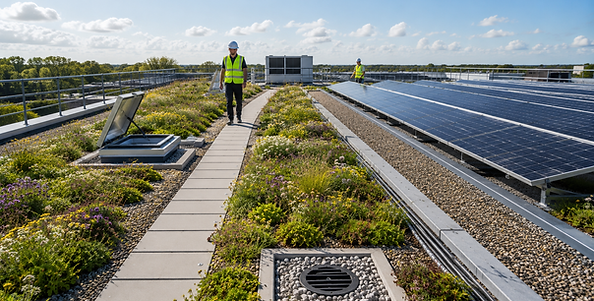
Access routes should allow people to reach equipment safely without damaging vegetation, overloading the build-up or interfering with drainage and PV components.
Good planning reduces risk, protects the roof and makes long-term maintenance easier and more efficient.
In Simple Terms:
Plan the route
Provide clear, durable access paths and safe working areas.
Protect the roof
Avoid unnecessary damage to vegetation, drainage and waterproofing.
Respect the PV system
Work carefully around live equipment, cabling and maintenance clearances.
6 Key Considerations
01
Access Routes
Provide clear routes to PV equipment, drainage points and maintenance areas.
04
Vegetation Protection
Prevent trampling, compaction and repeated disturbance to planted areas.
02
Roof Loading
Avoid unnecessary foot traffic, heavy storage and concentrated loads.
05
Edge & Fall Protection
Maintain suitable controls around roof edges and working zones.
03
Electrical Safety
Treat the PV array as live equipment and work around it carefully.
06
Maintenance Space
Allow enough room around modules, outlets and equipment for servicing.
Access Routes & Walkways
01
Well-planned access protects the roof and keeps maintenance practical.
-
Use designated walkways, stepping zones or suitable access routes.
-
Keep routes clear of loose materials, vegetation and trip hazards.
-
Provide safe access to roof plant, outlets and inspection points.
-
Ensure routes remain practical in wet or poor weather conditions.
-
Keep access paths clearly defined and maintained over time.
Working Around Live Solar PV
02
PV systems remain electrically active in daylight and require careful working practices.
-
Follow site-specific isolation and lockout procedures where required.
-
Treat connectors and cabling as live unless confirmed otherwise.
-
Maintain safe clearance around modules, cabling and inverters.
-
Use suitably competent personnel for electrical inspection or repair.
-
Report damaged cables, connectors or equipment immediately.

Foot Traffic, Loads & Storage
03
Uncontrolled foot traffic and concentrated loads can damage the roof build-up.
-
Keep regular access to defined routes and maintenance zones.
-
Avoid storing heavy materials or equipment on planted areas.
-
Use temporary load protection where additional working areas are needed.
-
Keep point loads away from sensitive roof details and interfaces.
-
Plan lifting and deliveries to minimise unnecessary roof loading.
.png)
Protecting Vegetation During Maintenance
04
Healthy vegetation depends on careful access and minimal disturbance.
-
Avoid repeated walking through planted areas and substrate.
-
Use defined routes and raised access where available.
-
Keep tools and removed vegetation off healthy planting zones.
-
Reinstate disturbed plants or substrate after maintenance works.
-
Avoid unnecessary compaction around panel rows and equipment.

Access Around PV Rows & Equipment
05
Maintenance space should remain available around critical components.
-
Leave suitable access beside and between PV rows where required.
-
Keep cable routes, isolators and equipment accessible.
-
Preserve routes to drainage outlets and inspection points.
-
Avoid vegetation obstructing module edges or maintenance areas.
-
Allow practical working space for inspection, cleaning and repairs.

When Temporary Protection May Be Needed
Repeated Access
Heavy Equipment
Material Storage
Roof Inspections
Adverse Weather
Repair Works
Where operatives need to cross planted areas several times regularly.
Where tools or equipment could concentrate loads on the roof.
Where temporary storage cannot
be kept off sensitive areas.
Where repeated access is required to inspect the roof build-up.
Where wet or vulnerable conditions increase the risk of damage.
Where roof, drainage or membrane repairs require temporary access.
Who Should Carry Out the Work?
Green Roof Maintenance
Suitable for:
-
Vegetation management and seasonal care
-
Substrate and drainage inspection
-
Plant health and establishment works
-
Irrigation and planting adjustments
Solar PV Maintenance
Suitable for:
-
Module inspection and cleaning
-
Mounting and cabling checks
-
Electrical system inspection
-
Performance and fault investigation
Roofing / Specialist Works
Suitable for:
-
Waterproofing inspection and repair
-
Roof-detailing and interface work
-
Structural or specialist concerns
-
Drainage and roof-system repairs
4 Common Access Mistakes
Walking Through Planting
Blocking Drainage
Poor PV Access
Unplanned Loading
Repeated traffic can compact substrate, damage plants and create bare areas.
Tools, debris or materials can obstruct outlets and interrupt water flow.
Tight clearances can make inspections, cleaning and repairs difficult.
Heavy or repeated loads can damage the roof build-up and interfaces.
Protecting Warranties
Good maintenance helps protect both roofing and solar warranties.
-
Follow manufacturer and installer requirements.
-
Keep accurate inspection and maintenance records.
-
Use suitable materials and protection methods.
-
Avoid unapproved changes to the installed system.
-
Report faults, damage or defects promptly.

Before Anyone Goes onto the Roof
A simple pre-access check helps reduce avoidable problems.
-
Confirm safe roof access is available.
-
Review the planned task and working area.
-
Check weather conditions are suitable.
-
Identify isolation points and emergency procedures.
-
Confirm tools and protection measures are appropriate.
-
Make sure the correct specialists are involved.
WHERE TO GO NEXT
To understand how biosolar compares with other combined roof systems, continue to Biosolar vs Green Roof Solar.
If you’d like to explore what a biosolar roof can achieve in terms of energy performance, biodiversity value, and planning outcomes, visit Key Benefits.
For policy drivers and regulatory context, the Biosolar and Planning / Policy page provides a concise overview of current UK guidance.
If you’re seeking a specialist contractor to deliver a biosolar roof system visit PV Plus
