.png)

LEARNING HUB
Key Benefits of a
Biosolar Roof
Explore the key benefits of biosolar roofs, including renewable energy generation, biodiversity, stormwater management, roof cooling and improved environmental performance.
3.6%
higher solar output
recorded on a biosolar roof*
70–80%
summer rainfall retained
helping reduce roof run-off**
Up to 20°C
cooler roof surface
during hot conditions*
7×
more insect activity
recorded in comparison study*
4×
more bird activity
recorded in comparison study*
* Recorded in a comparative biosolar roof study. Results vary by system design, climate and site conditions.
** Typical summer retention figure reported for green roofs; actual performance depends on roof build-up and rainfall conditions.
How Biosolar Roofs Deliver More
Every part of a biosolar roof has its own purpose, but the real value comes from combining them.
The solar array generates renewable electricity while the vegetation, substrate, drainage and wider green roof build-up create environmental benefits around and beneath it. When properly coordinated, one commercial roof can contribute towards several project objectives at the same time.
Generate More Renewable Energy
01
Vegetation can help create a cooler rooftop environment around the solar array. Because PV modules become less efficient as they get hotter, lower operating temperatures can help the system generate more electricity during warm conditions.
-
Vegetation helps moderate rooftop temperatures
-
Raised panels allow airflow underneath the modules
-
Cooler PV can operate more efficiently
The evidence: One real-world biosolar study recorded 3.6% greater solar output over an eight-month monitoring period compared with the conventional roof.
.png)
Create Valuable Urban Habitat
02
Instead of leaving the roof as a hard, unused surface, a biosolar system introduces vegetation and varied growing conditions. Sun, shade and moisture differences around the panels can create habitats for plants, insects, pollinators and birds.
-
Creates habitat within developed urban areas
-
Supports pollinators, insects and bird species
-
Introduces varied light and moisture conditions
The evidence: A comparative study found the green roof supported over 7× the arthropod diversity and 4× the bird diversity of the conventional roof.

Deliver More From Limited Roof Space
03
Biosolar combines renewable energy and green infrastructure on the same roof. This helps projects address energy, biodiversity and sustainability requirements while making better use of valuable commercial roof space.
-
Combines solar PV with green infrastructure
-
Can support onsite biodiversity targets
-
Makes better use of available roof space
The evidence: Most developments subject to Biodiversity Net Gain in England must deliver at least 10% BNG, with green roofs able to contribute towards onsite biodiversity units.

Create a More Protected Roof
04
The green roof build-up sits above the waterproofing, helping shield it from direct sunlight and rapid temperature changes. Vegetation and substrate also moderate surface temperatures, creating a less exposed rooftop environment.
-
Reduces direct UV exposure to waterproofing
-
Helps limit extreme surface temperatures
-
Adds protection above the roof membrane
The evidence: A biosolar research project measured green-roof surfaces up to 6.93°C cooler than the conventional comparison roof.
Slow and Retain Rainfall
05
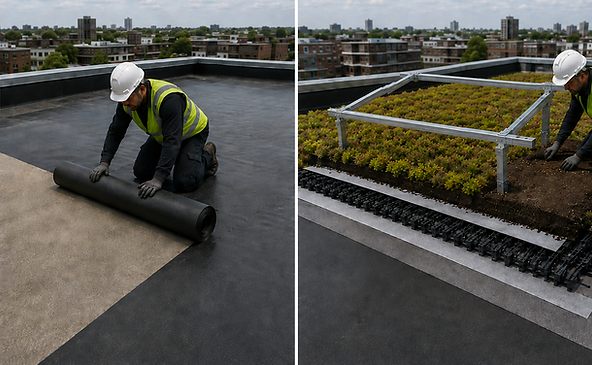
Vegetation, substrate and drainage layers temporarily hold rainfall instead of allowing it all to leave the roof immediately. Some water is used by plants or evaporates, while the remainder is released more gradually.
-
Temporarily stores rainfall within the roof
-
Slows water reaching drainage outlets
-
Can reduce pressure during heavy rainfall
The evidence: Greater London Authority research reports that a green roof can store up to 70% of rainfall, gradually releasing moisture afterwards.

One Roof. Multiple Benefits. Lasting Value.
A biosolar roof turns commercial roof space into a productive environmental asset.
By combining solar PV and green infrastructure as one coordinated system, it can generate renewable energy, support biodiversity, manage rainfall and improve roof resilience.
The best results come from considering the PV, green roof, drainage, access and maintenance requirements together from the start.
WHERE TO GO NEXT
To understand how biosolar compares with other combined roof systems, continue to Biosolar vs Green Roof Solar.
If you’d like to explore what a biosolar roof can achieve in terms of energy performance, biodiversity value, and planning outcomes, visit Key Benefits.
For policy drivers and regulatory context, the Biosolar and Planning / Policy page provides a concise overview of current UK guidance.
If you’re seeking a specialist contractor to deliver a biosolar roof system visit PV Plus
