.png)
LEARNING HUB
Biosolar
Build-Up
Explore a typical biosolar roof build-up and understand how solar PV, mounting, vegetation, substrate, drainage, protection and waterproofing layers work together.
Understanding a Typical Biosolar System
A biosolar roof combines green roof layers with a specialist solar mounting system to protect the building, support vegetation and generate renewable energy. Each layer has a specific role, and the system performs best when they work together as one coordinated build-up. The diagram below shows a typical biosolar arrangement — select any numbered point to learn what that component does, why it matters and who typically supplies and installs it.

5. Filter Fleece
What it is
A permeable geotextile layer between the substrate and drainage system.
What it does
Allows water through while helping stop fine substrate particles entering the drainage layer.
Why it matters
It protects long-term drainage performance and helps keep drainage voids clear.
Typically supplied by
Green roof system manufacturer.
Typically fitted by
Specialist green roof contractor.
4. Growing Substrate
What it is
An engineered growing medium that supports the vegetation. It is not simply ordinary soil.
What it does
Provides rooting space, nutrients, moisture storage and aeration for the plants.
Why it matters
Substrate depth affects planting, water retention, biodiversity potential and overall roof weight.
Typically supplied by
Green roof manufacturer or specialist substrate supplier.
Typically fitted by
Specialist green roof contractor.
3. Vegetation Layer
What it is
The living surface of the green roof, typically made up of sedum, grasses, wildflowers or other suitable rooftop plants.
What it does
Provides biodiversity, habitat, rainfall interception and green-infrastructure value.
Why it matters
Plants must suit the different sun, shade and moisture conditions created by the solar array.
Typically supplied by
Green roof manufacturer, vegetation supplier or specialist nursery.
Typically fitted by
Specialist green roof or landscaping contractor.
2. Mounting Rail / Frame
What it is
The mounting frame supports the PV modules above the green roof.
What it does
It holds the panels at the required angle and transfers wind and structural loads into the mounting system below.
Why it matters
Frame height and spacing affect vegetation, shading, airflow and maintenance access.
Typically supplied by
Solar mounting or biosolar system manufacturer.
Typically fitted by
Specialist solar PV installer or approved system installer.
1. Solar PV Module
What it is
The solar PV module is the electricity-generating part of the biosolar roof.
What it does
It converts sunlight into renewable electricity while creating different areas of sun, shade and rainfall across the green roof.
Why it matters
Panel orientation, pitch, spacing and height affect generation, airflow, vegetation and maintenance access.
Typically supplied by
Solar PV manufacturer, distributor or solar contractor.
Typically fitted by
Specialist solar PV installer.
6. Drainage / Water-Retention Board
What it is
A profiled or cellular layer that manages water beneath the green roof.
What it does
Moves excess rainfall towards roof outlets while some systems also retain water for vegetation.
Why it matters
Good drainage protects plant health, controls excess water and keeps drainage routes functioning.
Typically supplied by
Green roof or specialist drainage-system manufacturer.
Typically fitted by
Specialist green roof contractor.
7. Protection Fleece / Separation Layer
What it is
A protective layer positioned above the waterproofing membrane.
What it does
Helps protect the waterproofing from mechanical damage, abrasion and contact with the layers above.
Why it matters
Once the biosolar build-up is installed, the waterproofing becomes much harder to access.
Typically supplied by
Roofing or green roof system manufacturer.
Typically fitted by
Roofing contractor or specialist green roof contractor, depending on the system.
8. Mounting Feet / Base Plates
What it is
The lower supports of the PV mounting system, connected to the posts that rise through the green roof layers.
What it does
Transfers loads from the solar frame into the approved mounting arrangement beneath.
Why it matters
In integrated systems, the feet allow the green roof layers to continue around the supports while keeping the PV structure stable.
Typically supplied by
Solar mounting or integrated biosolar system manufacturer.
Typically fitted by
Solar, roofing, green roof or manufacturer-approved installer depending on the system.
9. Waterproofing Membrane
What it is
The primary waterproof barrier protecting the building beneath the biosolar roof.
What it does
Prevents water entering the building beneath the green roof and PV system.
Why it matters
It must remain watertight, compatible with green roof use and properly detailed before the build-up is installed.
Typically supplied by
Specialist roofing or waterproofing manufacturer.
Typically fitted by
Approved specialist roofing contractor.

2
3
4
9
6
7
5
8
1
How the Layers Work Together
A biosolar roof only works properly when the individual layers perform their own role while remaining compatible with the rest of the build-up.

Protects the Building
The waterproofing and protective layers form the secure foundation of the system, helping keep the building watertight and shielding the membrane from damage.

Manages Rainwater
Filter and drainage layers move excess rainfall towards roof outlets while retaining appropriate moisture within the build-up to support healthy vegetation.
Supports Vegetation
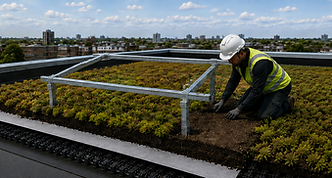
Growing substrate and planting provide the rooting environment, moisture and habitat needed to create a healthy and resilient green roof.

Generates Clean Energy
The mounting system elevates and supports the PV array, allowing renewable electricity generation while maintaining space for vegetation, drainage and access.
Component | Main Role | What Can Go Wrong | Why It Matters |
|---|---|---|---|
Solar PV Module | Generate renewable electricity from the available roof area. | Poor orientation, shading or spacing can reduce generation. | Determines the energy-producing performance of the biosolar roof. |
Mounting Rail / Frame | Support the modules at the required position, height and angle. | Incorrect design can cause wind, access or vegetation conflicts. | Provides a stable PV structure while maintaining usable space below. |
Vegetation Layer | Provide planting, habitat and green-infrastructure value. | Unsuitable species can fail, overgrow or shade the PV array. | Supports biodiversity and creates the living element of the roof. |
Growing Substrate | Provide rooting space, water storage, nutrients and aeration. | Incorrect depth or specification can affect plants, drainage and weight. | Directly influences vegetation health, retention and structural loading. |
Filter Fleece | Allow water through while retaining fine substrate particles above. | Missing or damaged fleece can allow material into drainage voids. | Helps protect the drainage layer and maintain long-term water movement. |
Drainage / Water-Retention Board | Move excess water towards outlets while retaining useful moisture. | Blocked or underspecified drainage can increase water accumulation. | Supports vegetation while ensuring the roof can drain effectively. |
Protection Fleece / Separation Layer | Protect and separate the waterproofing from components above it. | Poor coverage can expose the membrane to abrasion or mechanical damage. | Helps preserve the waterproofing once the biosolar build-up is installed. |
Mounting Feet / Base Plates | Transfer loads from the PV frame into the approved mounting arrangement. | Poor detailing can create loading, drainage or compatibility problems. | Forms a critical interface between the solar and green roof systems. |
Waterproofing Membrane | Provide the primary watertight barrier protecting the building. | Damage or poor detailing can result in difficult and costly leaks. | Everything above relies on the underlying roof remaining watertight. |
The exact build-up varies by roof type, manufacturer and project. Always follow the approved system specification, installation sequence and warranty requirements.
Before You Specify a Biosolar Build-Up
Roof & Green Roof
-
Confirm structural capacity for the proposed build-up, retained water, PV system and relevant design loads.
-
Define the planting approach including vegetation type, substrate depth and project biodiversity objectives.
-
Confirm drainage requirements including falls, outlets, retention requirements and access for inspection.
-
Check waterproofing compatibility with the green roof, mounting interfaces and warranty requirements.
-
Confirm the mounting approach against the roof type, wind design and selected green roof system.
-
Coordinate the PV layout with planting zones, drainage routes, roof features and maintenance access.
-
Plan long-term maintenance for vegetation, PV equipment, outlets, cabling and other roof components.
-
Agree responsibilities early between roofing, green roof, structural and solar specialists before installation.
One Roof, One Coordinated Build-Up
A biosolar roof is not simply a solar array installed above a green roof. The mounting, planting, drainage, protection and waterproofing layers need to be selected and detailed as one coordinated roof system.
Good coordination protects the building, supports healthy vegetation and allows the solar installation to perform and be maintained throughout its service life.
WHERE TO GO NEXT
To understand how biosolar compares with other combined roof systems, continue to Biosolar vs Green Roof Solar.
If you’d like to explore what a biosolar roof can achieve in terms of energy performance, biodiversity value, and planning outcomes, visit Key Benefits.
For policy drivers and regulatory context, the Biosolar and Planning / Policy page provides a concise overview of current UK guidance.
If you’re seeking a specialist contractor to deliver a biosolar roof system visit PV Plus